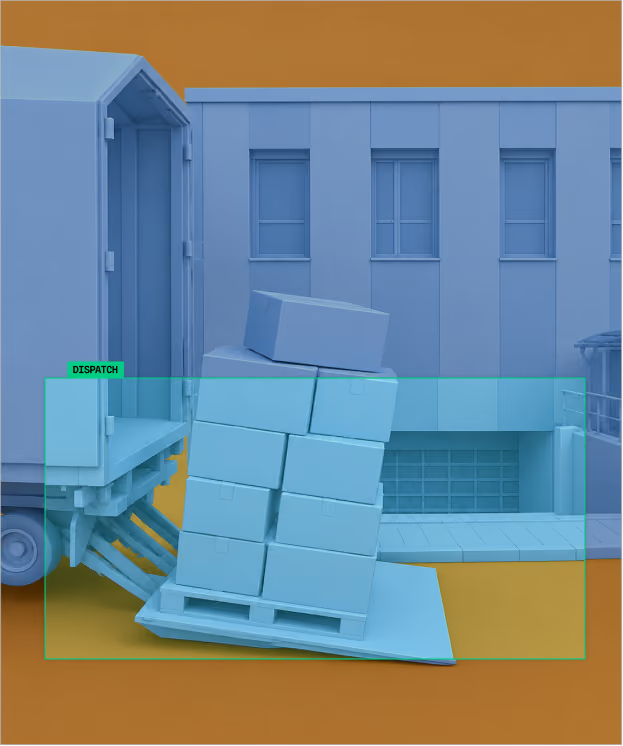
Every day, supply chain teams make hundreds of decisions. Which orders go on which trucks. Which routes through which cities. Which warehouses ship to which customers. Most of these decisions still get made the same way they were made twenty years ago: in spreadsheets, on whiteboards, sometimes totally ad hoc based on the whims and inbuilt knowledge of dispatchers.
For most of the last century, manual logistics optimization worked. Long predictable routes, batch planning that worked for days at a time. And it worked because the world moved slowly.
But eCommerce changed customer expectations. Same-day and next-day became must-haves. Urban populations densified. Delivery windows shrank. Fleet electrification added range read more constraints no spreadsheet could handle. Driver shortages and labour laws made every minute of route inefficiency a problem.
And then, things happen. Cities do not behave. Customers change their minds. Drivers get rerouted by construction that wasn’t there yesterday. A single late delivery or missed window cascades through an entire day of routes. Multiply that across thousands of stops, hundreds of vehicles, and dozens of service commitments, and you have a big operational problem.
This results in chaotic routes that waste time and fuel. There are frustrated customers who don’t have any clarity about when their parcel will be delivered. There are empty trucks on the road with no backfill or returns planning. There are exemptions and lack of compliance with a range of restrictions and boundaries.
We thought: We can do this better. More fuel and time efficiency, less vehicles on the road, better compliance with a range of legislation, happier customers.
Most of the software wasn’t built for the chaos, the volume of deliveries, the increasing complexity of physical constraints and legislation. Transportation management systems were built to execute freight movements. Routing tools were built for static problems. Spreadsheets were built for a world that no longer exists.
Mojro was created for the world that does. We solve the modern urban logistics problem.